Commercial pilot training contains several connected qualifications, and the abbreviations can make the route seem harder to understand than it is. This guide explains the pathway in plain language so that you can compare your goal, eligibility and training options with confidence.
A practical guide to the Commercial Pilot Licence with Instrument Rating pathway: what the qualifications mean, how training progresses and what to check before applying.
What does CPL/IR mean?
A Commercial Pilot Licence (CPL) is the professional licence that allows its holder to exercise commercial-pilot privileges within the limits of the licence and applicable regulations. An Instrument Rating (IR) is the qualification that develops and tests the ability to operate by reference to flight instruments under instrument flight rules.
The two are commonly presented together because professional flying requires more than visual aircraft handling. A complete pathway must connect ground knowledge, flight planning, accurate procedures, radio work, navigation, aircraft control and operational judgement.
How the professional pathway is structured
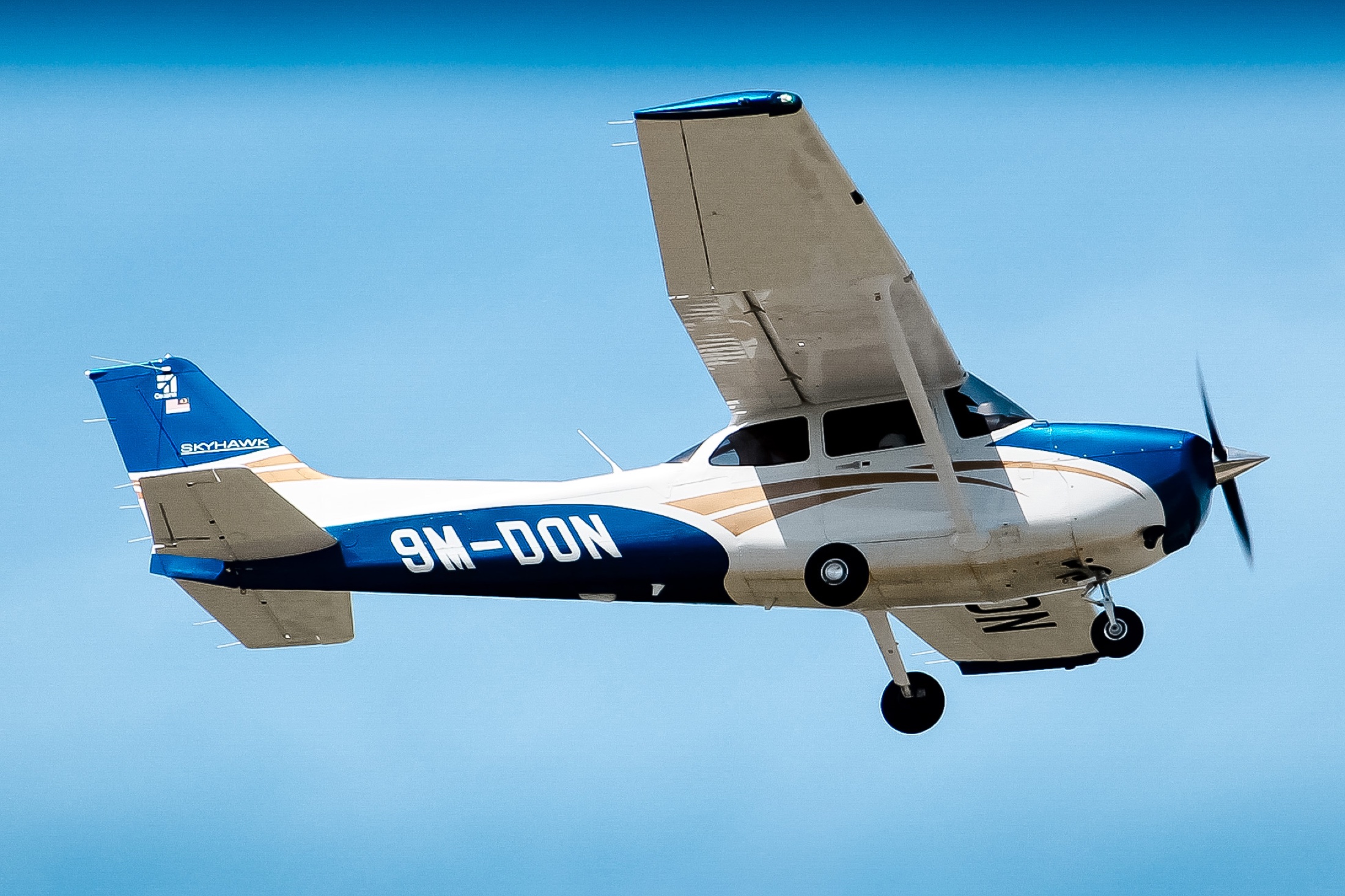
At LLFA, the published Commercial Pilot Licence with Instrument Rating pathway combines 850 hours of ground school with a 200-hour flying phase. The flying phase uses the Cessna 172 for single-engine development, an FNPT II simulator for repeatable instrument procedures, the Diamond DA42 for multi-engine training and the GameBird GB1 for Advanced Upset Prevention and Recovery Training.
Training is progressive. Ground school builds the technical foundation; single-engine flying develops handling, circuits, navigation and command; simulator sessions make complex instrument procedures repeatable; multi-engine training adds asymmetric-flight demands; and Advanced UPRT develops practical recognition, prevention and recovery skills. The approved syllabus and individual progress govern the actual delivery sequence.
CAAM entry requirements to check first
The Civil Aviation Authority of Malaysia states that a CPL applicant must be at least 18 years old, demonstrate a working level of English and hold a valid Class 1 medical assessment. Academic eligibility must also satisfy the current CAAM route. This may be five credits in one examination sitting, including English, Mathematics and a Science subject, or the recognised degree route described by CAAM.
Confirm your own eligibility before making major commitments. Academic equivalence, medical fitness and documentation can vary by applicant, especially for international students or applicants using qualifications issued outside Malaysia.
Where Frozen ATPL theory fits
“Frozen ATPL” is an industry term, not a separate licence handed to a new graduate. It generally describes a pilot who has completed the applicable Airline Transport Pilot Licence theoretical knowledge requirements and holds the professional licence and ratings needed for the next stage, but has not yet accumulated the experience required for a full ATPL.
This distinction matters: completing the training pathway does not mean that a full Airline Transport Pilot Licence is immediately issued, and it does not guarantee airline employment. It creates the licensing and knowledge foundation from which a pilot can continue building experience and pursuing suitable opportunities.
Choosing a training organisation
CAAM directs applicants to undertake approved professional flight training through an Approved Training Organisation. When comparing academies, look beyond a headline duration. Ask how ground school, aircraft, simulator training, instructor feedback, accommodation and operational scheduling work together.
Also ask how the academy explains delays, weather, aircraft serviceability and examination requirements. Clear, qualified answers are more valuable than promises. A responsible academy should help you understand both the opportunity and the obligations involved.
Frequently asked questions
Common questions about this topic
Do I need previous flying experience for a CPL/IR pathway?
No previous flying experience is required for eligible applicants beginning LLFA’s full professional pathway. Existing licence holders should request an individual pathway review.
How long does CPL/IR training take at LLFA?
LLFA publishes an indicative duration of 18–24 months. Weather, examinations, individual progress, aircraft serviceability and operational scheduling can affect completion.
Does CPL/IR guarantee an airline job?
No. Training completion, licence issuance and employment are separate outcomes. Airline recruitment depends on the employer, market conditions, assessments, experience and regulatory requirements.