If you have started researching how to become an airline pilot in Malaysia, you will have met the phrase “Frozen Airline Transport Pilot Licence (Frozen ATPL)” very quickly — usually without anyone explaining what it means. It is not an official licence you can hold in your hand. It is shorthand for a particular stage in a professional pilot’s career, and understanding it makes the rest of the training pathway much easier to plan.
Airline Transport Pilot Licence (ATPL): the licence at the top of the ladder
The Airline Transport Pilot Licence is the highest level of pilot licence. It is the licence required to act as pilot-in-command — the captain — of a large commercial aircraft operated by an airline. Everything below it exists to build towards it.
An ATPL has two broad sets of requirements. The first is knowledge: a substantial series of theoretical examinations covering subjects such as air law, meteorology, navigation, flight planning, aircraft general knowledge, human performance, operational procedures, principles of flight and radio telephony. The second is experience: a significant amount of logged flight time, along with specific experience conditions, accumulated over years of professional flying.
So what does “frozen” mean?
A pilot is commonly described as holding a Frozen ATPL when they have completed the ATPL theoretical examinations and hold a Commercial Pilot Licence with a valid Instrument Rating, but have not yet accumulated the flight time and experience the authority requires before the full ATPL can be issued.
The knowledge half is finished. The experience half is still being built. The licence is, in the industry’s informal phrasing, frozen until those conditions are met — at which point it is said to be “unfrozen” and the full ATPL can be issued.
It is worth being precise here, because the term causes a lot of confusion: Frozen ATPL is not a licence issued by an authority. What you actually hold is a Commercial Pilot Licence (CPL) with an Instrument Rating, plus credit for having passed the ATPL theory examinations. The Civil Aviation Authority of Malaysia confirms the exact requirements that apply to your case.
Why airlines care about it
From an airline’s point of view, a candidate at this stage has already cleared the single largest academic hurdle in the profession. The ATPL theory syllabus is demanding and takes most students many months of structured study. A pilot who has passed it has demonstrated they can absorb technical material at the level the job requires.
It also means the airline’s own training department can concentrate on type-specific and operational training rather than foundational theory. That is why recruitment advertisements so often list ATPL theory credit as a requirement or a strong preference.
How you get there from zero experience
The route is more structured than it first appears. A typical integrated pathway moves through these stages:
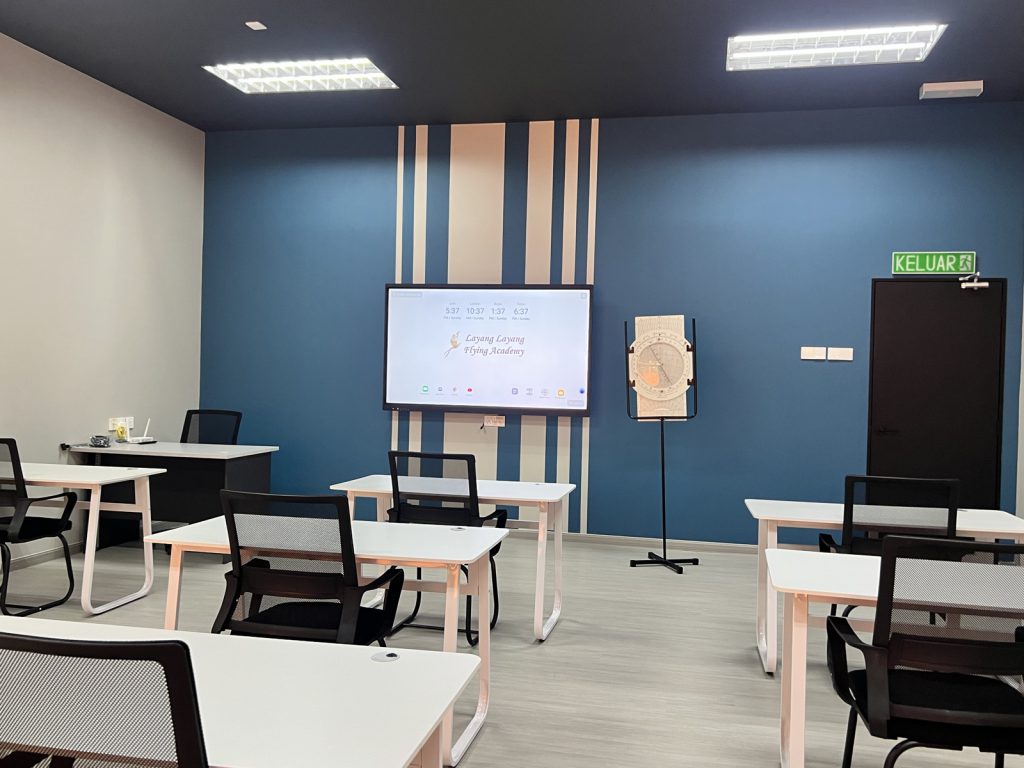
- Ground school — the theoretical knowledge programme at ATPL level, taken alongside or ahead of flying.
- Single-engine flying — aircraft handling, circuits, navigation and the development of command judgement.
- Instrument flying — procedures flown by reference to instruments, in the simulator and in the aircraft.
- Multi-engine operations — asymmetric handling, engine-out procedures and the coordination a twin demands.
- Upset prevention and recovery — practical recognition and recovery from unusual attitudes.
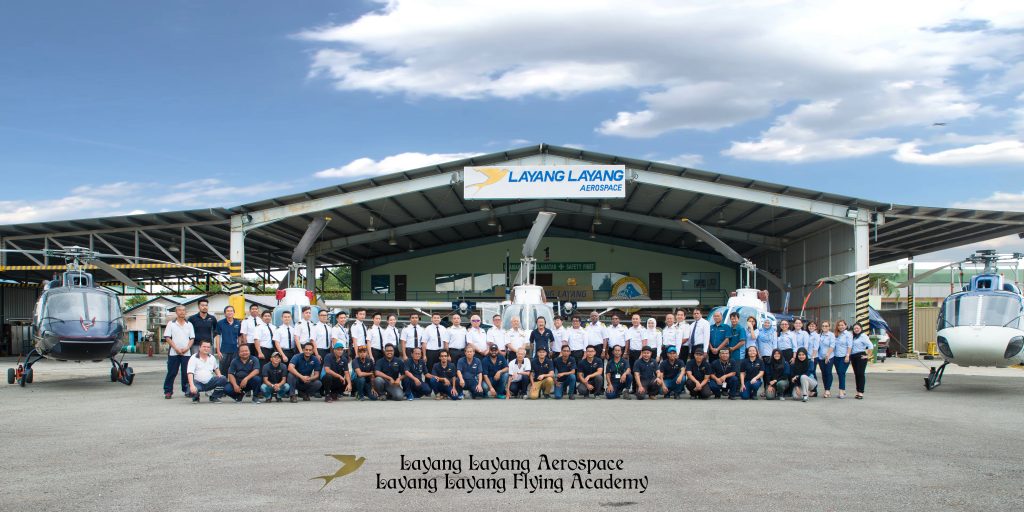
At Layang Layang Flying Academy these phases are delivered as one continuous programme. Our Commercial Pilot Licence with Instrument Rating and Frozen Airline Transport Pilot Licence pathway has a published structure of 850 hours of ground school and 200 hours of flying, with an indicative duration of 18 to 24 months.
Frozen Airline Transport Pilot Licence for helicopter pilots
The same logic applies on the rotary-wing side. A pilot working towards airline-level rotary operations follows a comparable route through commercial licensing, instrument capability and Airline Transport Pilot Licence (Helicopter) theory. We run this as the Commercial Pilot Licence with Instrument Rating and Frozen Airline Transport Pilot Licence — Helicopter programme.
Common misconceptions worth clearing up
“A Frozen Airline Transport Pilot Licence guarantees an airline job”
It does not. It makes you eligible to be considered where ATPL theory credit is required, which is a meaningful step, but recruitment depends on the operator, the market and the individual candidate.
“You can skip the Commercial Pilot Licence and go straight to the Airline Transport Pilot Licence”
You cannot. The Commercial Pilot Licence and Instrument Rating are the foundation the ATPL is built on.
“The theory exams never expire”
Theoretical knowledge credits carry validity periods set by the authority. Plan your training so that your flying and your examinations progress together rather than leaving a long gap between them.
Where to start
If your goal is a professional cockpit, the practical first steps are to confirm you meet the entry requirements, arrange a Civil Aviation Authority of Malaysia (CAAM) Class 1 medical assessment, and speak to an academy about intake timing. Requirements are confirmed by LLFA Admissions before enrolment and remain subject to the approved syllabus and applicable CAAM requirements.
Read more about the Commercial Pilot Licence with Instrument Rating and Frozen Airline Transport Pilot Licence programme, or contact our admissions team to discuss your starting point.