Where you train shapes your training more than most prospective cadets expect. Airspace, traffic density, weather and the distance between classroom and aircraft all affect how many useful hours you actually fly. This is what training from Sultan Azlan Shah Airport in Ipoh is like.
A regional airport, not a major hub
Sultan Azlan Shah Airport serves Ipoh, the capital of Perak. It handles commercial traffic, but it is not a congested international hub — and for flight training that is an advantage rather than a limitation.
At a busy major airport, training aircraft queue. Circuits are interrupted, departures are delayed and a booked slot can deliver a fraction of its intended value. At a regional airport, students get airborne closer to the time they planned and spend more of the sortie training.
Airspace with room to work
Effective training needs somewhere to go. Practice areas for general handling, stalling and upset recovery need to be reachable without a long transit, and navigation exercises need varied terrain to make cross-country flying meaningful.
Perak provides that mix — coastline to the west, higher terrain inland, and a spread of aerodromes and features that make navigation exercises genuinely instructive rather than a straight line between two points.
Weather you have to learn to read
Malaysia’s tropical climate is not always convenient, and that is part of its training value. Convective activity develops through the day, and students learn early to read a forecast properly, brief alternates and make honest go/no-go decisions.
Pilots trained in reliably benign conditions sometimes arrive at their first operational job without ever having made a difficult weather decision. Training here builds that judgement from the beginning. It also means schedules flex around conditions — an unavoidable part of flying anywhere.
Everything on one site
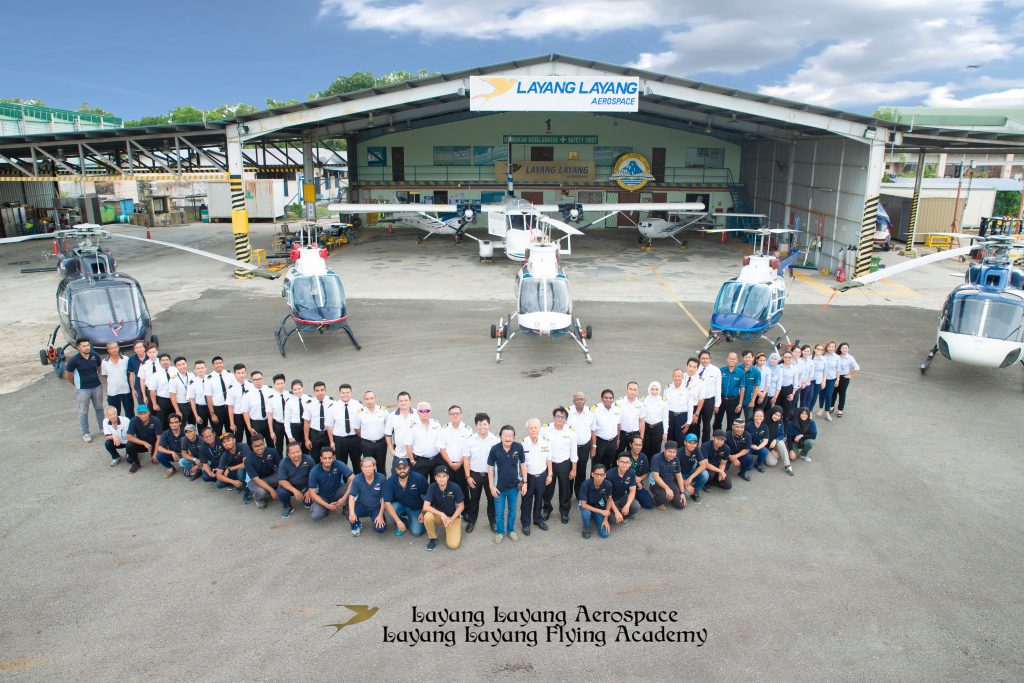
The practical advantage of the Ipoh campus is proximity. Ground school, briefing rooms, the Flight and Navigation Procedures Trainer (FNPT II) simulator, the hangar and the apron are on one site. A student can attend a theory session, brief a sortie, walk to the aircraft and debrief afterwards without travelling between locations.
That matters more than it sounds. Time lost commuting between a classroom and an airfield is time not spent training, and it makes the short-notice flexibility that flying demands far harder to accommodate. See the campus and facilities.
Maintenance on site
LLFA is part of the Layang Layang Aerospace group, and engineering support sits alongside the training operation. For a student, the relevant consequence is aircraft availability: a fleet supported on site spends less time unavailable, and scheduled sorties are more likely to happen as planned. See the training fleet.
Living in Ipoh
Ipoh is a manageable city — considerably less expensive than Kuala Lumpur, well connected by road and rail, and small enough that daily logistics do not consume your week. For a student on an intensive eighteen-month programme, low friction in daily life is worth more than it appears on paper.
Questions about accommodation come up often; our FAQ covers what we can arrange and what students organise themselves.
Come and see it
Reading about a training environment only goes so far. If you are seriously considering a programme, visiting the campus, seeing the aircraft and meeting instructors will tell you more than any brochure.
Contact LLFA Admissions to arrange a conversation or a visit, or explore the programmes first.