Ask any professional pilot what they remember most clearly from training and the answer is almost always the same: the first solo. Not the licence, not the skill test — the twenty minutes when the seat beside them was empty for the first time.
This is what the early weeks of the flying phase of a Commercial Pilot Licence with Instrument Rating programme are actually like, and what has to happen before an instructor steps out of the aeroplane.
Before you fly anything
Flying training runs on briefings. Every sortie is preceded by one and followed by a debrief, and the flight itself is the shortest part of the sequence. The briefing establishes what the exercise is, what standard is expected, what the aeroplane will be doing and what you will be doing.
It takes new cadets a few weeks to realise the debrief is the important half. The flight generates the raw material; the debrief turns it into learning. Cadets who treat the debrief as a verdict on their performance make slow progress. Cadets who treat it as free coaching accelerate.
The first sorties
Early exercises follow a well-worn sequence, refined over decades of instruction because it works:
- Familiarisation. What the aircraft looks and sounds like, where everything is, how it feels in the air.
- Effects of controls. What each control does, in isolation and in combination — the foundation everything else rests on.
- Straight and level, climbing, descending, turning. The four building blocks, flown until they are accurate rather than approximate.
- Slow flight and stalling. Discovering where the aeroplane stops flying, and how it warns you first.
- Circuits. Take-off, climb, downwind, base, final, land. Then again.
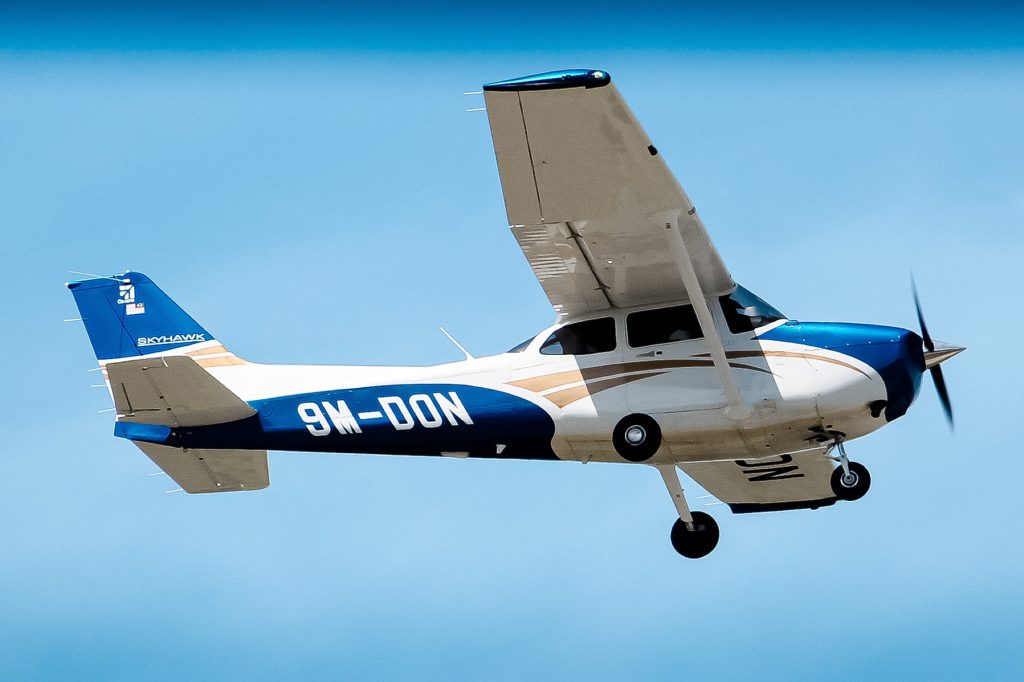
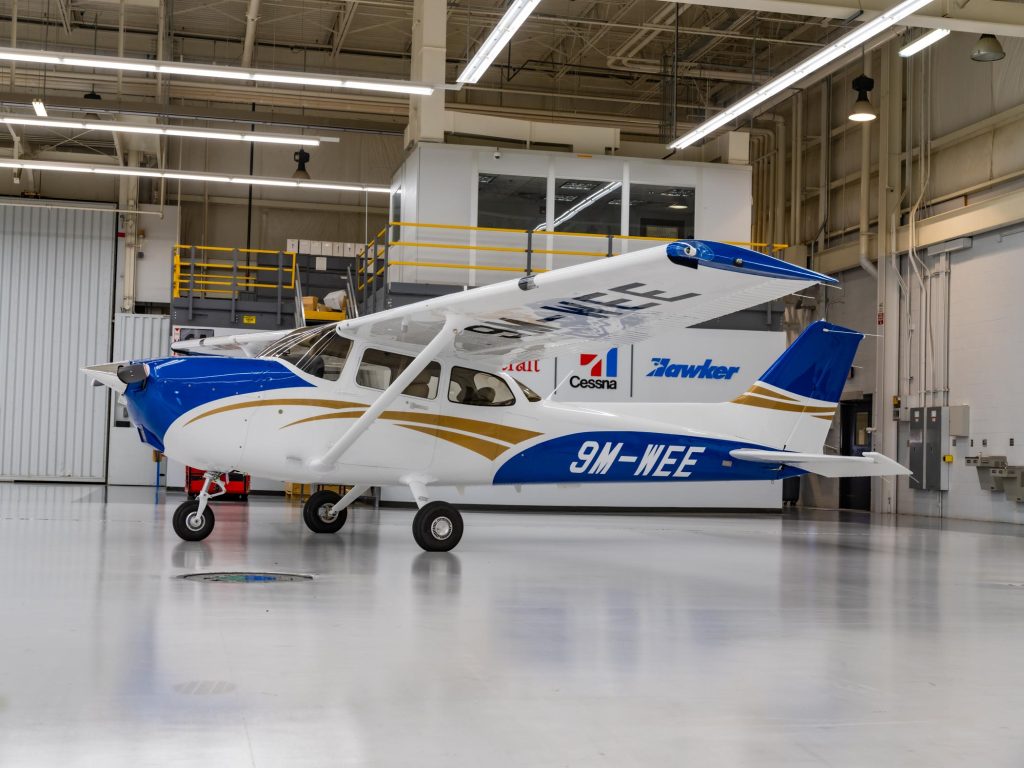
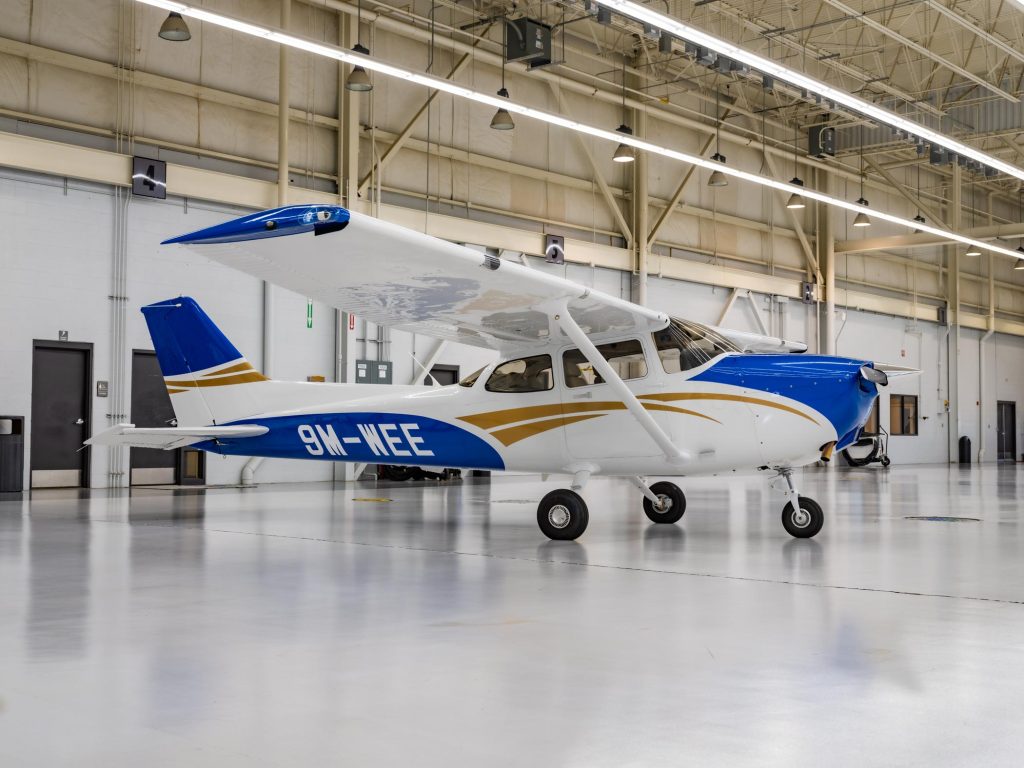
Most of the flying at Layang Layang Flying Academy in this phase is on the Cessna 172 Skyhawk — a stable, forgiving high-wing single used worldwide for exactly this purpose.
Circuits, and why there are so many of them
The circuit is where the whole skill set comes together under time pressure: flying accurately, judging the approach, managing power and attitude, talking on the radio, and doing it all again four minutes later. It is also where progress feels least linear. Cadets commonly have a run of good landings, then a bad day, then a breakthrough.
That plateau is normal. It is a sign that your attention is still being consumed by the mechanics, and it clears once the mechanics become automatic and capacity is freed for judgement.
What the instructor is actually checking
Handling accuracy matters, but it is not the only thing being assessed before a solo. Instructors are looking for:
- Consistency. Not one perfect landing — several safe, repeatable ones in a row.
- Recognition. Whether you notice a bad approach and go around, rather than trying to rescue it.
- Handling of the unexpected. A gust, a late radio call, an aircraft ahead that vacates slowly.
- Airmanship. Lookout, checks, radio discipline, awareness of everything else in the circuit.
- Composure. Whether you stay ahead of the aeroplane when the workload rises.
An instructor sending a student solo is putting their own judgement on the line. The decision is conservative for good reason.
The day it happens
It is rarely announced in advance. Typically you fly a normal detail of circuits, land, and the instructor asks you to taxi to the apron, gets out, and tells you to do one circuit alone. Then they walk away and watch.
Two things surprise almost everyone. The aeroplane climbs noticeably better without the second occupant, which changes the picture on the first circuit. And the cockpit is very, very quiet. Most cadets describe the flight itself as passing in a blur, followed by the clearest sense of achievement they have had.
After solo
First solo is a milestone, not a graduation. What follows is consolidation: more solo circuits, then the general handling area alone, then navigation — planning a route, flying it, coping when the plan meets reality, and eventually longer cross-country flights. The centre of gravity of the training shifts from handling the aircraft to commanding the flight.
If it is taking longer than you expected
Some cadets solo early, some later, and the correlation with eventual ability is weak. What genuinely slows people down is more mundane:
- Gaps between sorties. Handling skill decays quickly. Frequency beats intensity.
- Flying tired. Fatigue costs capacity exactly when you need it, and late-night study before an early sortie is a poor trade.
- Not preparing. Arriving without having thought through the exercise means using the flight to learn what should have been read the night before.
- Defensiveness in the debrief. Instructors correct because that is the job. Take it flat.
What it tells you about the rest of the course
The habits that produce a first solo — preparation, honesty, consistency, calm under load — are the same habits that produce an Instrument Rating, a skill test pass and, later, a functioning airline pilot. The aeroplane gets bigger. The method does not change.
See the full Commercial Pilot Licence with Instrument Rating programme, or speak to Admissions about intake timing. Programme details are subject to Layang Layang Flying Academy confirmation, the approved syllabus and applicable Civil Aviation Authority of Malaysia requirements.