“200 hours of flying” is the number every prospective cadet fixes on, and almost nobody arrives knowing what it is made of. It is not 200 hours of the same activity. It is a structured sequence in which each block of hours exists to teach something specific, and in which the last hours look nothing like the first.
This guide breaks down how the flying phase of a Commercial Pilot Licence with Instrument Rating programme is built, and what the hours are actually buying.
Hours are a structure, not a target
The published figure describes the shape of an approved course, not a quota to be filled. Minimum experience requirements exist in regulation, but no student is signed off because a number was reached — they are signed off because the required standard was demonstrated. Some cadets need a few more sorties in one phase and fewer in another. That is normal and expected.
Dual, solo and the transfer of command
Every flight falls broadly into one of two categories, and the balance between them tells the story of the course:
- Dual instruction. An instructor is on board, teaching, correcting and assessing. Early training is almost entirely dual.
- Solo, or pilot-in-command, flying. You are alone, or you are the one responsible, and the decisions are yours. This time is logged separately because it is what regulators and employers use to measure command experience.
The course is, in effect, an eighteen-month transfer of authority from the right-hand seat to the left. The hours are the mechanism.
Phase by phase, what the hours are for
General handling and circuits
The first block covers effects of controls, climbing, descending, turning, slow flight, stalling and — repeated far more than students expect — circuits. Take-off, circuit, approach, landing, again. This is where consistency is built, and it culminates in first solo.
Navigation and cross-country
Next the aircraft starts going somewhere. Route planning, map reading, radio navigation, diversions and, eventually, longer qualifying cross-country flights flown alone. This block builds the judgement that handling exercises cannot: when to press on, when to turn back, when the plan needs to change. See night flying and cross-country navigation for what this phase involves in detail.
Instrument flying
A substantial part of the programme is flown by sole reference to instruments. Much of the early procedural work is rehearsed in a Flight and Navigation Procedures Trainer before it is flown in the aircraft, because a simulator can be frozen, reset and repeated with failures and weather that would be impractical or unsafe to stage in flight. Simulator time is logged, credited within the limits the approved course allows, and is some of the most productive training on the programme.
Multi-engine operations
Moving onto a twin such as the Diamond DA42 introduces asymmetric flight, engine-out handling and the higher workload of a more complex aircraft. The hours here are fewer but denser, and they consolidate the Instrument Rating in the environment closest to a commercial cockpit.
Upset prevention and recovery
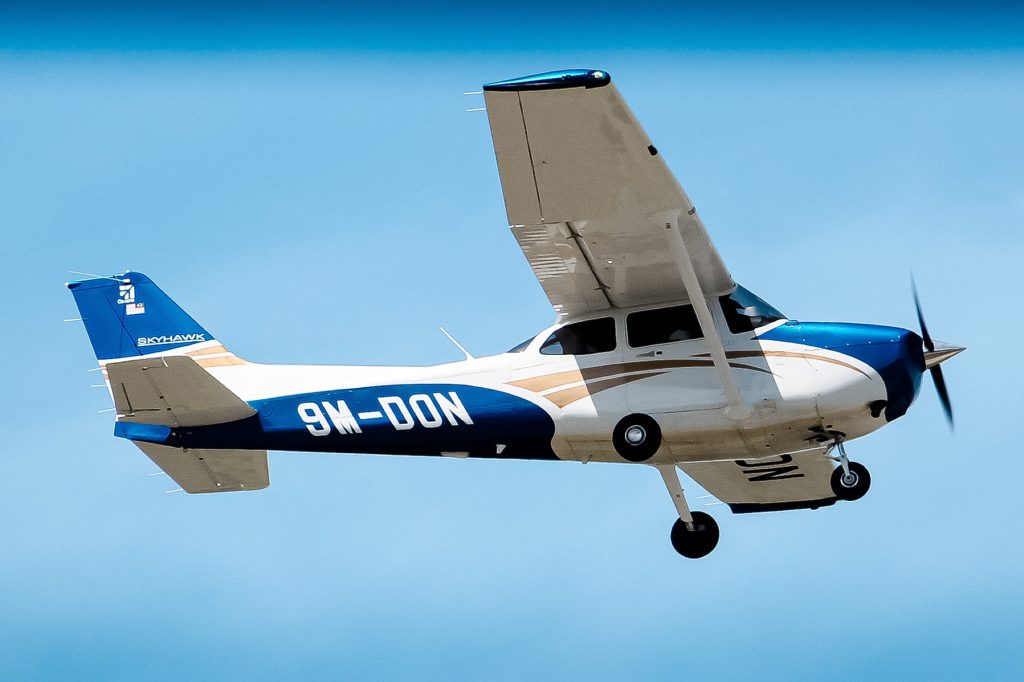
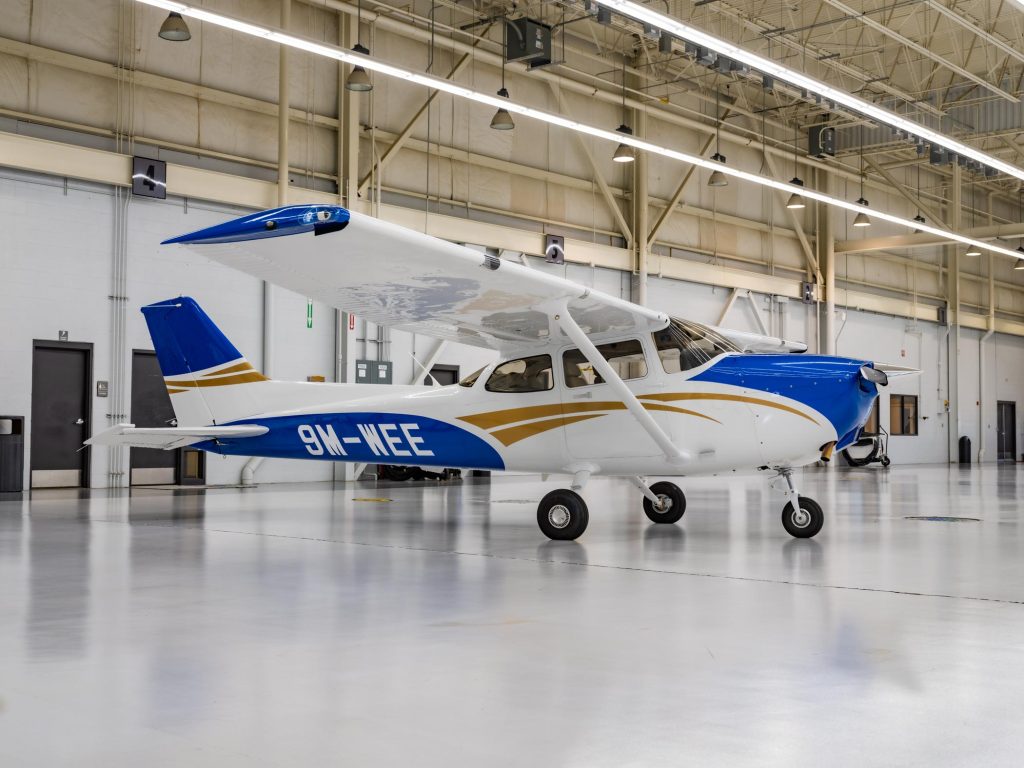
A short, intense block of Advanced Upset Prevention and Recovery Training, flown on the Cessna 172 and the aerobatic GameBird GB1. Very few hours; a disproportionate effect on confidence.
What a “one hour” sortie really costs you
New cadets plan their days around flight time and are then surprised by how full the day is. A single logged hour typically involves:
- Preparation and self-briefing beforehand — weather, route, performance, the exercise itself.
- A pre-flight briefing with the instructor, covering what will be flown and to what standard.
- Walk-around, checks, taxi and the flight itself.
- A debrief afterwards, which is where most of the learning actually happens.
Two or three hours on the ground for every hour in the air is not unusual, particularly early on. Budget your energy accordingly.
Why hours slip, and what to do about it
Flying schedules are pushed around by weather, aircraft serviceability, airspace availability, examiner scheduling and your own progress. None of that is unusual and none of it is a sign that something has gone wrong. What separates cadets who stay close to the plan from those who drift:
- Fly frequently. Handling skill decays fast. Two sorties a week beats eight in one week and then a fortnight off.
- Stay ready. If a slot opens because someone else’s weather cancelled, the prepared cadet takes it.
- Keep the theory current. Falling behind in ground school eventually stops the flying, not the other way round.
- Debrief honestly. Hours flown while repeating the same error are not progress.
More on the realistic calendar in how long the training takes.
Logbook discipline
Your logbook is the permanent record of everything above, and it will be examined — by the authority when licences and ratings are issued, and by every employer afterwards. Fill it in the same day, keep the categories right, and get it certified as required. A logbook reconstructed from memory two years later is a problem you can avoid entirely by spending five minutes after each flight.
Quality, not quantity
At the end of the programme you will hold around 200 hours. That is not a large number by professional standards — the point is not the total, it is that the hours were flown under supervision, to a defined standard, across the full range of operations a commercial pilot needs. What happens to the number afterwards is a different question, covered in what happens after you qualify.
See the full Commercial Pilot Licence with Instrument Rating programme, or speak to Admissions about intake timing and eligibility. Programme details are subject to Layang Layang Flying Academy confirmation, the approved syllabus and applicable Civil Aviation Authority of Malaysia requirements.