Course pages tell you what a programme contains. They rarely tell you what the eighteen months actually feel like. This guide walks through a Commercial Pilot Licence with Instrument Rating and Frozen Airline Transport Pilot Licence programme phase by phase, so you know what you are committing to before you commit.
What the qualification consists of
Three things are being built at once:
- A Commercial Pilot Licence — the licence that permits paid flying
- An Instrument Rating — permission to fly by sole reference to instruments
- Airline Transport Pilot Licence (ATPL) theoretical knowledge credit — the academic half of the airline licence, giving what the industry calls a Frozen Airline Transport Pilot Licence (Frozen ATPL)
At LLFA the published structure is 850 hours of ground school and 200 hours of flying, with an indicative duration of 18 to 24 months.
Phase 1: Ground school
The programme opens with theory, and the volume surprises most people. The ATPL syllabus spans air law, meteorology, navigation and flight planning, principles of flight, aircraft general knowledge, human performance and limitations, operational procedures, and radio telephony and communications.
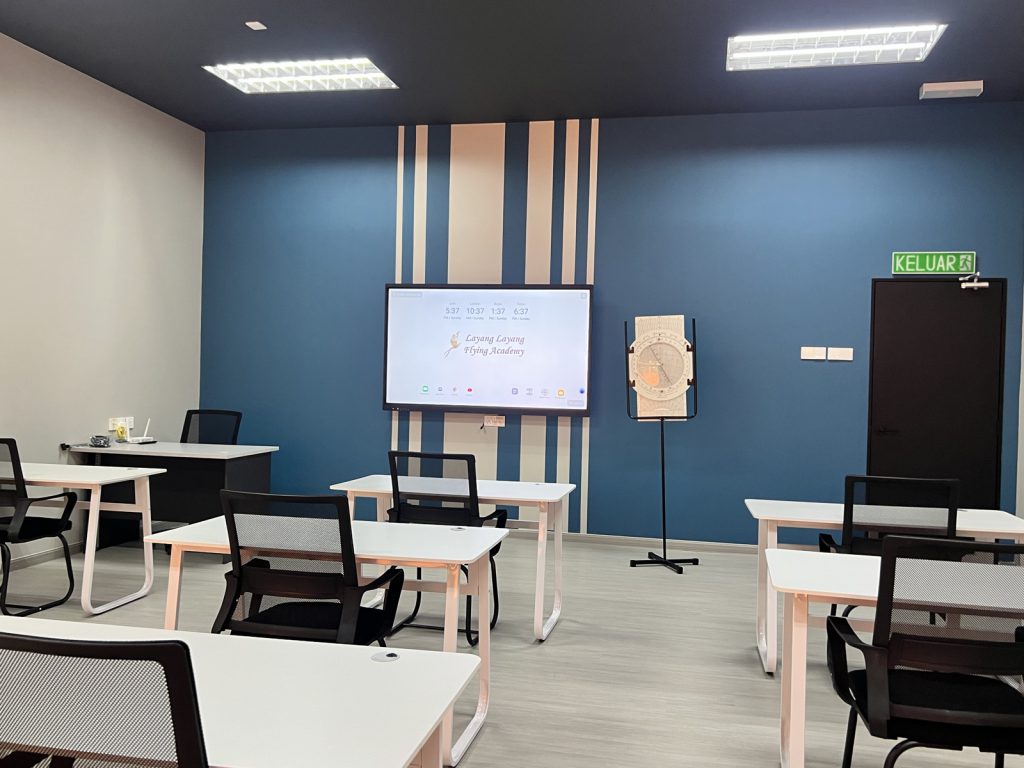
This phase is classroom-based, examination-driven and relentless. Students who do well treat it like a full-time degree rather than something to fit around other commitments. It is also where the habits that make a safe professional pilot are formed — precision, preparation and the willingness to be corrected.
Phase 2: Single-engine flying
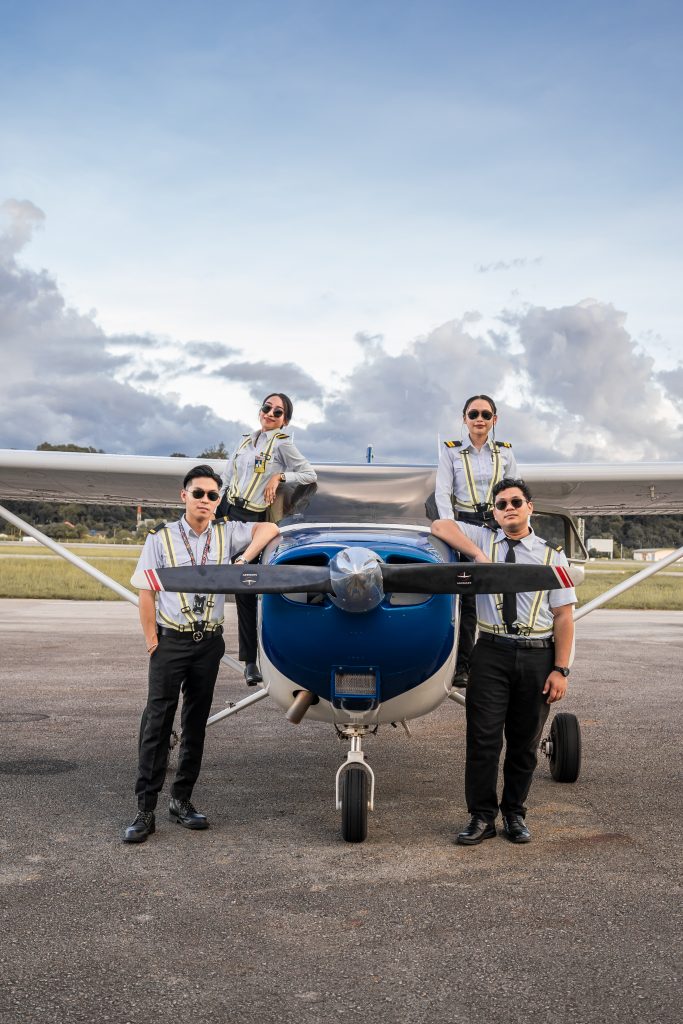
Flying begins on the Cessna 172, a stable high-wing single that is used worldwide for exactly this purpose. Early sorties cover effects of controls, climbing, descending and turning. Then circuits — take-offs and landings, repeated until they are consistent — leading to first solo, which remains the moment most pilots remember most clearly.
From there training moves outward: navigation, cross-country flights, diversions, and the gradual transfer of decision-making from instructor to student. This is where “handling the aircraft” becomes “commanding the flight”.
Phase 3: Instrument flying
Instrument training is the phase that changes how people think about flying. Without external visual reference, you fly the aircraft entirely by its instruments, following published procedures with tight tolerances.
Much of it is rehearsed first in a Flight and Navigation Procedures Trainer (FNPT II) simulator. A simulator lets an instructor freeze a scenario, reset it, and run it again — introducing failures, weather and abnormal situations that would be unsafe or impractical to stage in the aircraft. Procedures are learned on the ground, then flown for real.
Phase 4: Multi-engine operations
Moving to a twin such as the Diamond DA42 introduces asymmetric flight: what happens when one engine stops and the other keeps producing thrust. The aircraft yaws, the handling changes, and the correct response has to be immediate and correct.
This phase consolidates the Instrument Rating in a more complex aircraft and is the closest the programme comes to the operational environment of a commercial cockpit.
Phase 5: Upset prevention and recovery
Advanced Upset Prevention and Recovery Training teaches recognition of, prevention of, and recovery from unusual attitudes — the situations that fall outside normal operating parameters. At LLFA this is flown on the Cessna 172 and the aerobatic GameBird GB1.
It is the phase students most often describe as the one that changed their confidence, because it replaces a theoretical fear with a trained response. Read more about Advanced Upset Prevention and Recovery Training.
What a typical week looks like
Training days start on the ground. Cadets prepare, brief, and walk out to the aircraft with an instructor. Every flight is preceded by a briefing and followed by a debrief — the debrief is where most of the learning happens. Weather, aircraft availability and airspace all shape the schedule, so flexibility matters.
What makes students struggle
In our experience the difficulties are rarely about natural ability at the controls. They are about:
- Underestimating ground school. Falling behind on theory delays the flying.
- Financing arranged too late. Approvals take time and interrupt progress if left until the last moment.
- Medical assumptions. Always obtain the Class 1 assessment before committing.
- Inconsistent attendance. Flying skills decay quickly with gaps between sorties.
Is it right for you?
The programme rewards people who are methodical, who take correction without defensiveness, and who can sustain effort over two years rather than two months. Natural aptitude helps; consistency matters more.
See the full Commercial Pilot Licence with Instrument Rating and Frozen Airline Transport Pilot Licence programme, check the entry requirements, or speak to Admissions about intake timing. Programme details are subject to LLFA confirmation, the approved syllabus and applicable Civil Aviation Authority of Malaysia (CAAM) requirements.