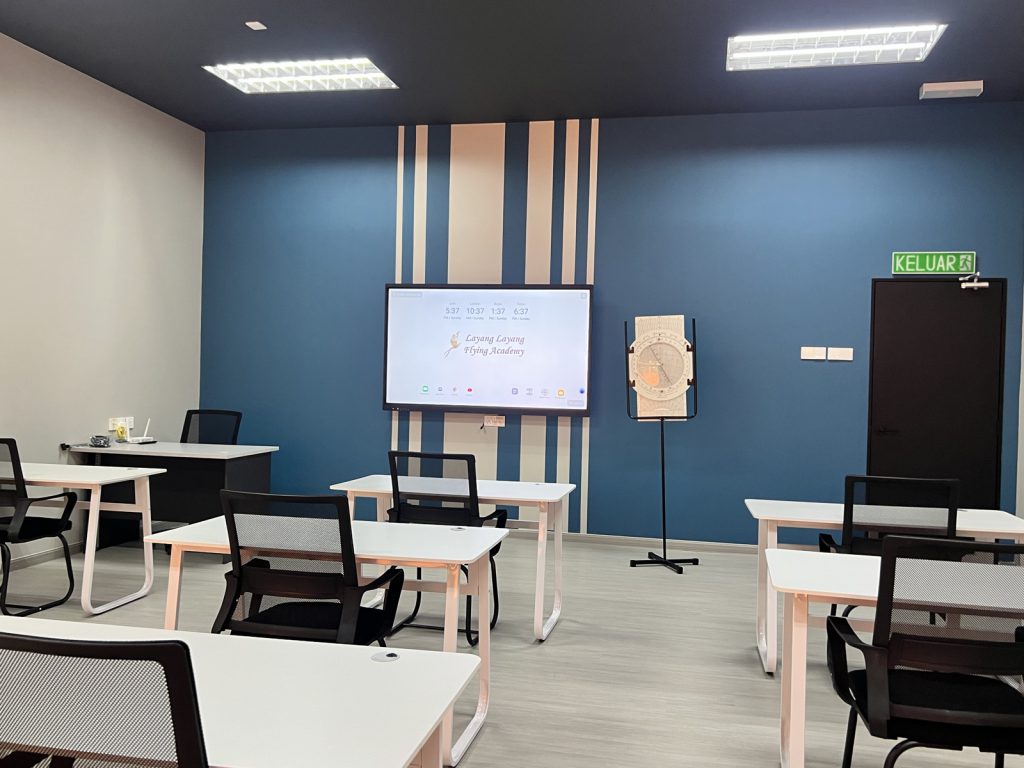
Airline Transport Pilot Licence (ATPL) theory is the largest single component of professional pilot training. At LLFA the published structure allocates 850 hours to ground school — more than four times the 200 hours of flying. This is what those hours actually cover.
Air Law
The rules that govern flight: airspace classification, rules of the air, licensing, and the obligations that come with holding a licence. Dry on the page, but it is the framework everything else operates inside.
Meteorology
How the atmosphere behaves and how to read it. Pressure systems, cloud formation, thunderstorms, icing, visibility, wind, and the forecasts and reports pilots use to make go/no-go decisions. In a tropical climate this is not academic — convective weather is a daily operational reality.
Navigation and Flight Planning
Getting from A to B and knowing you will arrive with fuel to spare. Chart work, track and heading, drift, ground speed, and the flight planning process including fuel calculation, alternates and payload. This is where the Mathematics entry requirement earns its place.
Principles of Flight
Why an aeroplane flies and what makes it stop flying. Lift and drag, angle of attack, stability, stalling, and the aerodynamics of high and low speed flight. Understanding this properly is what makes upset recovery training make sense rather than being a set of memorised actions.
Aircraft General Knowledge
How the machine works: airframes, engines, electrical systems, hydraulics, fuel, pressurisation, and the instruments and avionics that present it all to the crew. Broad, and the subject most students find largest in volume.
Human Performance and Limitations
The pilot as a system component. Physiology at altitude, vision, spatial disorientation, fatigue, stress, decision-making and crew interaction. It explains, among other things, why your inner ear lies to you in cloud — which is exactly the problem instrument flying trains you to overcome.
Operational Procedures
How commercial flying is actually conducted: standard operating procedures, emergency and abnormal procedures, and the operational context a professional pilot works within.
Radio Telephony and Communications
Standard phraseology, radio discipline and the structure of exchanges with air traffic control. Precise, economical language exists because ambiguity on a frequency is dangerous.
How to survive it
Ground school is where most students who struggle actually struggle, and it is rarely about intelligence. Consistently, the pattern is this:
- Treat it as full-time. 850 hours is a serious academic load, comparable to a demanding degree year.
- Stay ahead of the flying. Theory that lags behind the aircraft slows the whole programme.
- Do not memorise in isolation. The subjects interlock — meteorology feeds flight planning, principles of flight feeds handling.
- Sit examinations when ready. Resits wait for the next scheduled sitting, which costs calendar time.
Why passing it matters beyond the exam
Completing ATPL theory while holding a Commercial Pilot Licence (CPL) with an Instrument Rating is what gives you a Frozen Airline Transport Pilot Licence (Frozen ATPL). Airlines value it because it demonstrates you can absorb technical material at the level the job demands, and because it lets their own training concentrate on type-specific work.
See how ground school fits the Commercial Pilot Licence with Instrument Rating (CPL/IR) programme, or ask Admissions about the next intake. Syllabus content and examinations are set by the authority; details are subject to LLFA confirmation and applicable Civil Aviation Authority of Malaysia (CAAM) requirements.